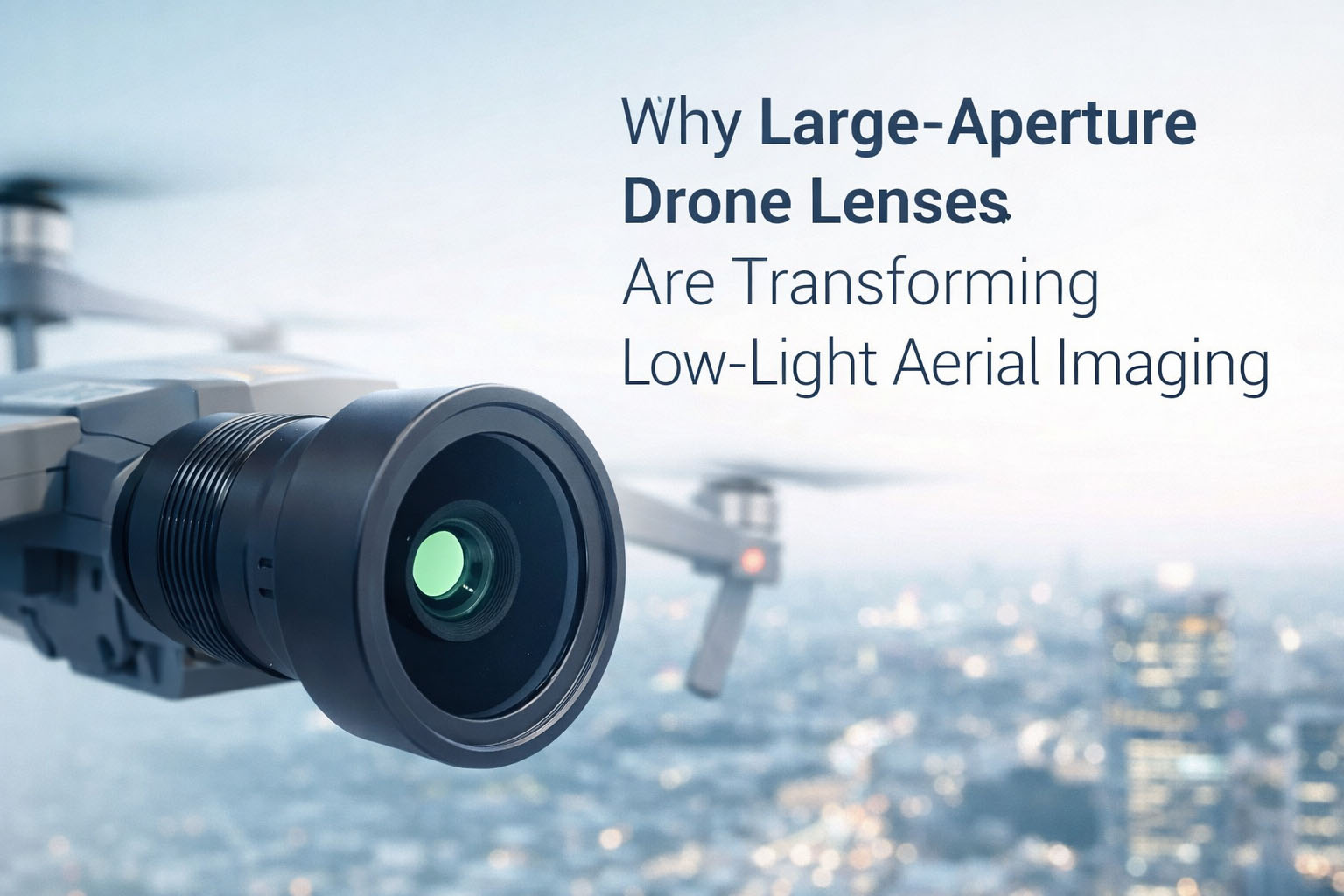
Why Large-Aperture Drone Lenses Are Transforming Low-Light Aerial Imaging?
Feb 28, 2026
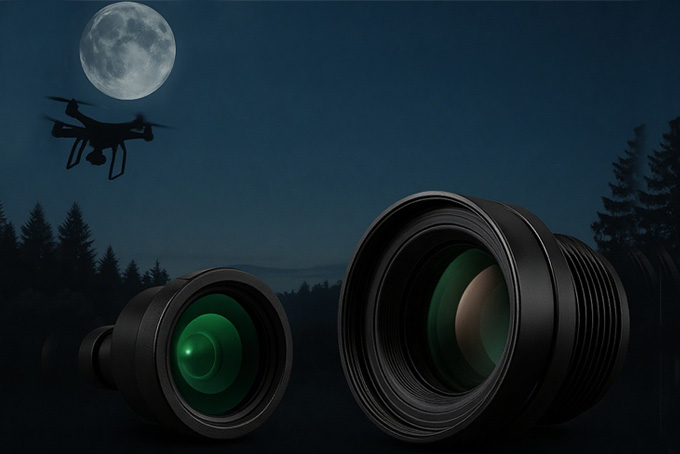
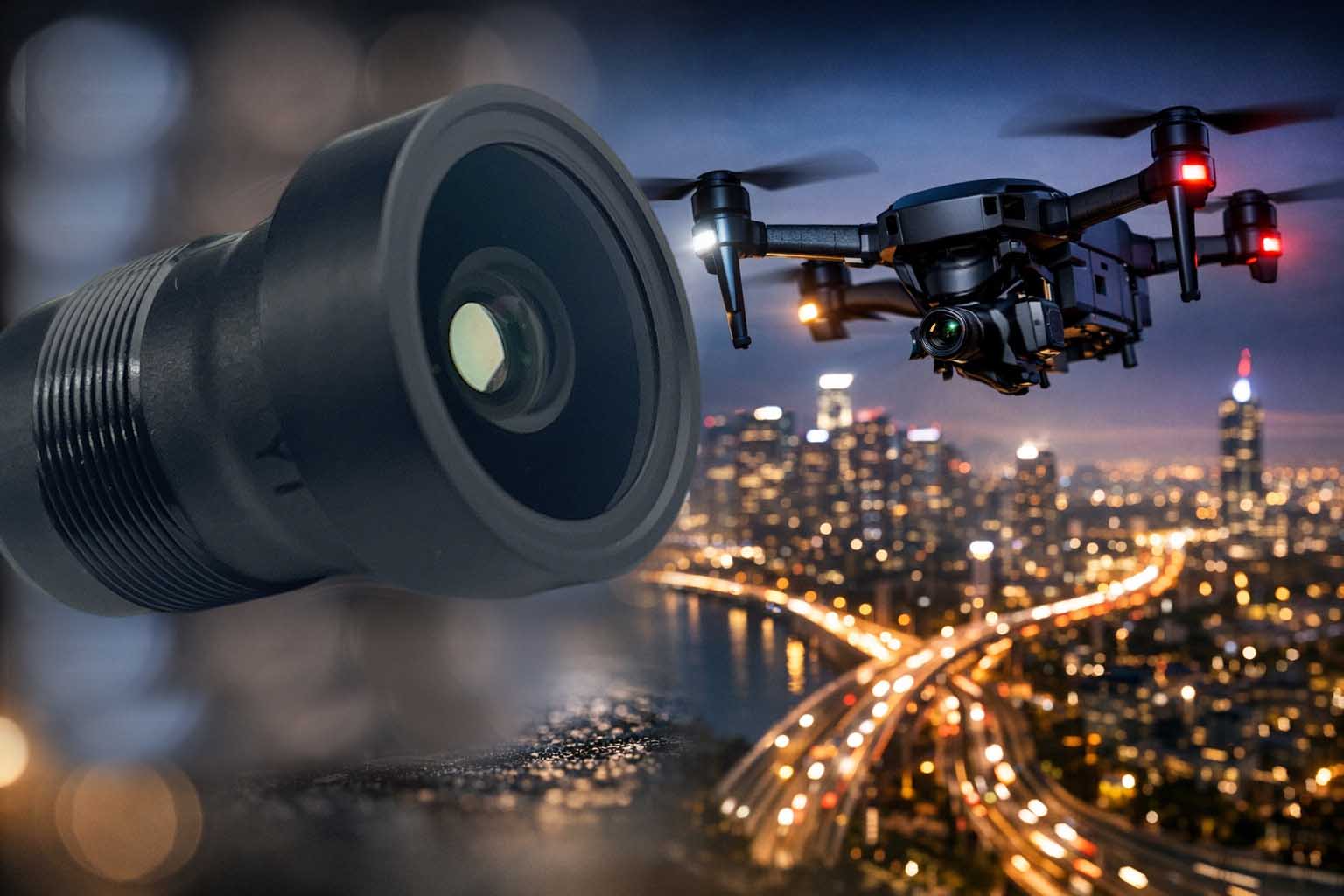
As drone imaging technology continues to evolve, the large-aperture drone lens is becoming a defining feature for both professional aerial cinematography and industrial-grade inspection tasks. Whether for night patrol missions, low-light photography, or emergency response in complex environments, drones equipped with high-aperture lenses are reshaping what we can capture from the sky.
Why Does Aperture Matter So Much for Drones?
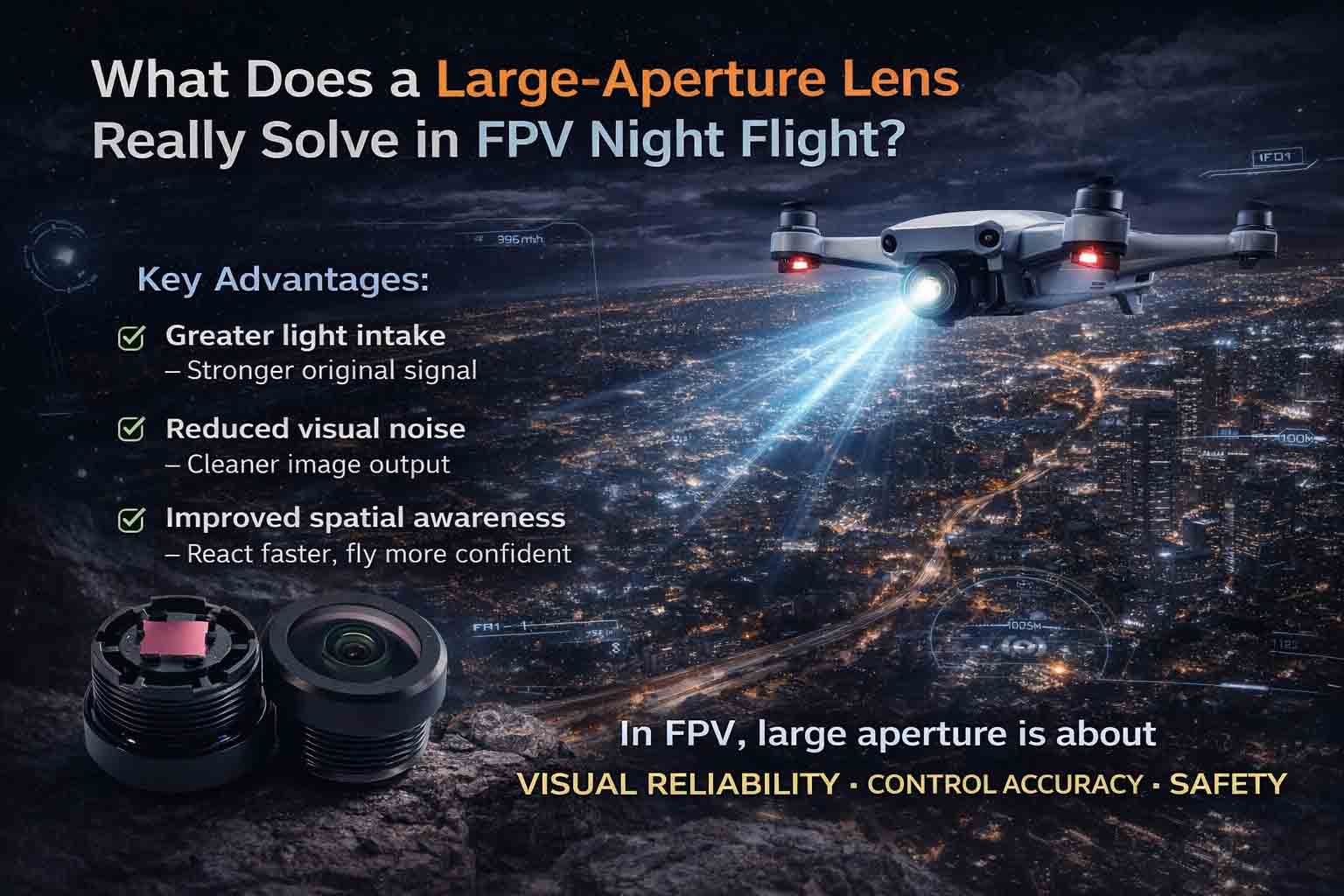
Compared with traditional small-aperture drone lenses, a large aperture dramatically increases the amount of light reaching the sensor. This means that even in dim or challenging lighting conditions, the camera can still deliver cleaner, sharper, and more detailed images. If you’ve ever struggled with noise, blurring, or loss of detail during nighttime or indoor flights, a large-aperture lens directly addresses those issues.
In short, here’s what a large-aperture lens brings to drone imaging:
1. Superior Low-Light Performance
With a wider aperture, the sensor captures more light in each exposure. This allows the camera to maintain lower ISO levels, reducing noise and delivering clearer footage—even in near-dark environments.
2. Faster Shutter Speeds for Stable Flight
Drones often operate in windy or fast-moving situations. A large aperture enables faster shutter speeds, minimizing motion blur and ensuring crisp images even during dynamic maneuvers.
3. Artistic Shallow Depth of Field
Beyond practical benefits, a bright lens opens new creative possibilities. A shallower depth of field helps isolate subjects, adds visual atmosphere, and elevates the cinematic quality of aerial footage.
Key Application Scenarios for Large-Aperture Drone Lenses
Nighttime Security and Emergency Response
Urban security, traffic monitoring, border patrol, and emergency rescue often require clear nighttime imaging. A drone equipped with a large-aperture lens provides the visibility needed to support accurate decision-making under low-light conditions.
Energy Infrastructure Inspection
Facilities such as wind farms, solar fields, and transmission towers frequently require inspections during dawn, dusk, or nighttime. Large-aperture lenses help drones capture fine structural details without relying heavily on artificial lighting, improving both efficiency and reliability.
Film Production and Commercial Aerial Work
For creators aiming to shoot city nightscapes, dramatic landscapes, or advertisements, a fast lens offers greater exposure control and allows production teams to push beyond traditional daylight-only limitations.
What to Consider When Choosing a Large-Aperture Drone Lens
If you’re evaluating professional-grade drone lenses, keep these features in mind:
Aperture size (e.g., f/1.0, f/1.1, f/2.0): Smaller numbers indicate larger apertures.
Focal length and coverage: Wide-angle lenses suit mapping and inspection, while telephoto designs excel at long-range detail capture.
Optical quality: Look for strong edge-to-edge sharpness, high resolution, and effective flare control.
Weight and structure: A lightweight lens improves drone endurance and maneuverability.
Compatibility: Ensure proper integration with your gimbal system and drone platform.
Large-Aperture Lenses Will Define the Next Generation of Aerial Imaging
As drones become essential tools in security, industry, filmmaking, and environmental monitoring, the demand for high-quality imaging continues to rise. Large-aperture lenses—thanks to their low-light strength, stability advantages, and creative flexibility—are quickly becoming the cornerstone of modern drone-based visual systems.
If you’re looking to push your aerial imaging capabilities beyond the limits of daylight, upgrading to a large-aperture drone lens may be the most impactful step you can take.



 Sign Up To Our Newsletters


 IPv6 network supported.