other
  • Understanding FPV Drone Lenses: Key Optical Factors That Shape Flight Performance
    Understanding FPV Drone Lenses: Key Optical Factors That Shape Flight Performance Nov 28, 2025
    In FPV (First-Person View) drone systems, the lens plays a central role in determining image clarity, latency, field of view, and overall visual feedback during flight. As FPV drones continue to be used in freestyle flying, racing, cinematography, mapping, and training, understanding how an FPV lens is designed and what technical parameters matter can help users choose more suitable optical solutions for their application scenarios. This article introduces the essential characteristics of an FPV drone lens, along with the optical design considerations that impact real-time flight perception. 1. Field of View (FOV): The Foundation of FPV Perception The Field of View determines how much of the environment is visible in the camera feed. For FPV flying, especially racing and freestyle, pilots typically prefer: Ultra-wide FOV (150°–180° equivalent) Allows better spatial awareness and smoother maneuvering Wide-angle distortion control Ensures the image remains recognizable and natural during fast movements A well-designed ultra-wide angle lens balances wide coverage with acceptable distortion levels, providing pilots with stable visual cues. 2. Optical Resolution and Image Sharpness Resolution affects how clearly the camera captures textures, positions, and details. Key factors include: Lens resolving power (MTF performance) Optical distortion level Chromatic aberration control Sensor compatibility (1/1.8", 1/2", 1/3", etc.) A high-resolution FPV drone lens should maintain consistent sharpness across the entire image, including the edges, as peripheral clarity is critical in wide-angle FPV feeds. 3. Latency Behavior and Optical Transmission Efficiency Latency in FPV systems is influenced by both the camera and the optical lens. Lens design affects latency indirectly through: Light transmission efficiency (T-value) Coating quality Internal reflections and stray light control A lens with high light transmission enables the sensor to obtain sufficient information more quickly, which supports low-latency FPV video transmission. 4. Aperture Size and Low-Light Performance FPV flying often occurs in variable lighting conditions — indoor spaces, sunset environments, tunnels, or shaded outdoor areas. A large aperture (e.g., F1.6 – F2.0) enables: Improved low-light visibility Reduced noise from the sensor More stable exposure in fast transitions Combined with appropriate anti-reflective coatings, a lens can maintain clear imaging in both bright and dim environments. 5. Lens Materials and Structural Durability FPV drones experience vibration, rapid acceleration, and occasional impact. Thus, the physical structure of the lens is as important as its optical performance. Considerations include: Glass versus hybrid (glass + resin) elements Lens barrel material (aluminum, PC/ABS, composite materials) Resistance to temperature changes Weight requirements for drone balance A stable optical structure ensures consistent focus performance across repeated flights. 6. Sensor Compatibility and Image Format Different FPV systems use different sensor sizes and aspect ratios. Matching the lens to the sensor ensures: Correct back focal distance Optimal coverage without vignetting Accurate focus position Proper use of the sensor’s full dynamic range Sensor formats commonly used in FPV include: 1/3", 1/2", 1/1.8" CMOS. 7. Application-Specific Lens Selection Different FPV use cases require different optical priorities: Freestyle FPV Wide FOV High image stability Controlled distortion FPV Racing Extremely low latency Fast light adaptation Edge-to-edge clarity Cinematic FPV Higher resolution Low-distortion imaging Color rendering accuracy Industrial FPV High contrast Consistent optical performance Robust housing design
  • How Camera Lenses Enhance the Vision and Accuracy of Delivery Robots
    How Camera Lenses Enhance the Vision and Accuracy of Delivery Robots Nov 22, 2025
    As autonomous delivery becomes increasingly common in smart cities and commercial logistics, the delivery robot is quickly transforming from a novel idea into a reliable part of everyday life. Behind each robot’s ability to navigate streets, avoid obstacles, and deliver packages safely is a critical component: the camera lens. A high-quality delivery robot lens is essential for creating a stable and intelligent visual system. From wide-angle coverage to environmental durability, the performance of the lens defines how accurately a robot understands its surroundings. Wide-Angle Vision for Complex Environments Delivery robots operate in diverse and unpredictable environments—sidewalks, warehouses, shopping malls, or residential areas. A wide-angle robotics camera lens gives robots the field of view they need to detect pedestrians, pets, bicycles, and other obstacles in time. With a broader FOV, the robot’s perception module receives more complete visual information, making navigation smoother and reducing collision risks. For autonomous delivery systems that rely heavily on computer vision, this wide-angle coverage is indispensable. Low Distortion for Precise Object Recognition Accurate recognition depends on accurate imaging. If a lens introduces heavy distortion, the robot’s AI algorithms may misjudge distances or object shapes. A professional AGV lens or robotics lens minimizes distortion while maintaining clarity from the center to the edges. This ensures that visual data is clean and consistent, allowing machine-learning models to perform object detection, lane following, and path planning with higher precision. Reliable Performance in All Lighting Conditions Delivery robots often work day and night. This requires a lens that can handle everything from bright sunlight to dim indoor lighting. High-quality delivery robot lenses feature enhanced low-light performance, high transmittance, and optimized coating that suppresses glare and improves contrast. Whether the robot operates at noon or during late-night deliveries, the imaging remains stable and clear. Built for Outdoor Durability From rain and dust to temperature fluctuations, delivery robots face challenging environmental conditions. A robust robot camera lens is built with weather-resistant materials, anti-fog design, and mechanical stability to ensure reliable operation throughout the day. Applications such as sidewalk delivery, campus delivery, and commercial logistics all require dependable optical components that can endure long-term outdoor exposure. Powering Smart Logistics and Autonomous Mobility A well-engineered delivery robot lens plays a crucial role in multiple tasks: Autonomous navigation Obstacle detection Package recognition Indoor–outdoor transition Real-time monitoring As smart logistics continues to develop, the demand for advanced optics in delivery robots will only grow. High-precision lenses enable robots to move safely, respond accurately, and integrate seamlessly into modern intelligent delivery networks. Advancing the Future of Robotic Vision Optical performance is no longer just an accessory—it is a core part of a robot's intelligence. By combining wide-angle imaging, durability, low distortion, and stable performance, the next generation of delivery robot lenses will enable smoother, safer, and more efficient autonomous delivery operations.  
  • How Drone Camera Lenses Elevate Aerial Photography?
    How Drone Camera Lenses Elevate Aerial Photography? Nov 12, 2025
    In the world of aerial imaging, the drone camera lens is the key element that transforms flight data into stunning, high-definition visuals. Whether used for landscape photography, inspection, mapping, or surveillance, the performance of a drone lens determines how accurately and vividly a drone captures the world from above. The Importance of Optical Precision in Aerial Imaging A drone’s ability to produce stable, high-quality footage depends largely on the optical precision of its aerial photography lens. Unlike standard lenses, drone lenses must balance wide field of view, lightweight construction, and low distortion—ensuring that every image is sharp and geometrically accurate, even when taken from high altitudes or at high speeds. High-end drone camera lenses are designed with specialized coatings and aspherical elements to minimize chromatic aberration and glare caused by direct sunlight. This enables drones to maintain excellent image contrast and color fidelity, even in bright outdoor environments. Wide-Angle Lenses for Broader Perspectives A wide-angle lens is essential for most aerial applications. It allows the camera to capture expansive landscapes and structural details in a single frame, making it ideal for surveying, environmental monitoring, and cinematic shots. By expanding the field of view while maintaining low optical distortion, wide-angle drone lenses help pilots and mapping systems achieve more accurate data collection and spatial representation—key requirements for industrial and commercial drone operations. Adapting to Environmental Challenges A reliable drone lens must endure the unpredictable conditions of aerial work—temperature fluctuations, vibration, and humidity. High-quality optical materials and precise mechanical design ensure focus stability and resistance to optical drift, maintaining consistent image performance across long flight durations. Additionally, lenses with anti-fog coating and dust-resistant structures allow drones to operate effectively in high-humidity or dusty outdoor environments, ensuring that the captured footage remains clear and reliable. High Resolution and Low Distortion for Professional Results For mapping and inspection tasks, accuracy matters as much as beauty. A low-distortion lens ensures the captured image corresponds precisely to real-world dimensions, while high-resolution optical design delivers fine detail and sharpness across the frame. These features are critical for drone applications such as powerline inspection, agricultural analysis, and infrastructure monitoring—where clarity and measurement precision determine operational success. The Future of Drone Imaging As drone technology advances, lenses are evolving to meet higher standards of resolution, sensitivity, and environmental durability. Manufacturers are focusing on optimizing aperture control, multi-layer coatings, and lightweight composite materials to support longer flight times and more complex imaging missions. Whether for creative aerial cinematography or industrial surveying, the demand for precision-engineered drone camera lenses continues to rise. Optical innovation will remain the foundation for smarter, safer, and more efficient drone vision systems. About Wintop Optics With over 19 years of expertise in precision optical engineering, Wintop Optics specializes in developing high-quality lenses for drones, automotive vision, surveillance, and intelligent imaging applications. Our drone lens solutions are designed to meet the highest standards of clarity, durability, and stability—empowering aerial systems with reliable vision from takeoff to landing.  
  • Why Wide-Angle Lenses Are Critical for ADAS Cameras?
    Why Wide-Angle Lenses Are Critical for ADAS Cameras? Oct 24, 2025
    In modern vehicles, Advanced Driver Assistance Systems (ADAS) have become a core component of intelligent driving. These systems rely heavily on cameras to perceive the environment, detect obstacles, and assist drivers in making safer decisions. At the heart of this technology lies a key optical component — the wide-angle lens. Expanding the Field of View for Safer Driving An ADAS camera lens must capture as much of the surrounding environment as possible to detect potential hazards in time. A wide-angle lens allows the camera to cover a broader field of view, minimizing blind spots and improving situational awareness. For instance, in lane departure warning and blind spot detection, a wide-angle automotive lens ensures that vehicles, pedestrians, and road edges are all within the camera’s visual range. This broader coverage gives ADAS systems more data to analyze, helping prevent accidents before they happen. Accurate Image Capture with Low Distortion While wide-angle lenses provide a larger field of view, maintaining low optical distortion is critical for accurate image analysis. Excessive distortion can mislead image processing algorithms and affect object detection performance. High-quality automotive lenses are designed with advanced optical structures and coatings to reduce distortion while preserving image sharpness and contrast. This balance between wide coverage and accurate geometry is essential for reliable ADAS operation. Adapting to Harsh Automotive Environments Cameras used in vehicles must perform reliably in extreme outdoor conditions — from freezing mornings to high-temperature summer days. A professional ADAS camera lens features robust optical materials, anti-fog coatings, and temperature-resistant construction. These lenses maintain stable focus and clarity even under vibration, humidity, and rapid temperature changes, ensuring consistent performance on every drive. Enabling Intelligent Vision Systems In an intelligent driving system, each ADAS camera serves a specific function: front-facing cameras monitor traffic, side-view cameras assist in lane changes, and rear cameras provide parking assistance. Wide-angle lenses play a crucial role in all these applications by enhancing peripheral visibility and supporting real-time image stitching for 360° surround view systems. With advancements in AI recognition and sensor fusion, the demand for high-quality wide-angle automotive lenses continues to grow. They enable the vehicle’s vision system to perceive depth, detect objects more accurately, and operate seamlessly in dynamic traffic environments. The Future of Automotive Vision As the automotive industry moves toward higher levels of automation, ADAS lenses will require even greater precision and environmental adaptability. Future designs will focus on improved light transmission, lower distortion, and better resistance to environmental stress — ensuring safer, smarter, and more reliable driving assistance.  
  • How to Choose the Right Dash Cam Lens for Reliable Vehicle Recording?
    How to Choose the Right Dash Cam Lens for Reliable Vehicle Recording? Oct 11, 2025
    In today’s automotive industry, dash cameras have become essential for both personal vehicles and commercial fleets. For buyers and manufacturers, selecting the right dash cam lens is not just about resolution—it’s about reliability, clarity, and performance under real-world driving conditions. 1. Image Clarity: The Core of a Dash Cam Lens The quality of a dash camera begins with its lens. A high-definition car camera lens ensures that every frame is captured with precise details, from license plates to facial features. For professional dash cams, choosing a lens with high transmittance glass and low distortion is key to maintaining clear image output, especially during high-speed motion or sudden light changes. 2. Wide-Angle Design for Complete Road Coverage A wide-angle dash cam lens provides a broader field of view, minimizing blind spots and capturing multiple lanes of traffic. For fleet vehicles and taxis, this helps record a more complete perspective of driving incidents, which can be crucial for insurance and safety investigations. 3. Reliable Performance in Harsh Environments Dash cams operate in extreme conditions—exposed to direct sunlight, heat from car interiors, or freezing temperatures. A durable automotive lens must maintain stable optical performance under these challenges. High-temperature resistance and anti-fog coatings prevent image degradation, ensuring that the camera performs consistently from hot summer days to cold winter mornings. 4. Low Light and Night Vision Capability Many accidents occur at night or in dim lighting. A low-light optimized dash cam lens enhances image brightness and reduces noise, allowing the camera to capture sharp details even on poorly lit roads. Pairing the lens with an infrared (IR) filter can further improve visibility without glare or reflection from headlights. 5. IP-Rated Protection for Long-Term Stability Dust, humidity, and vibration are constant threats inside vehicles. A lens with IP67 or IP69 waterproof and dustproof rating offers long-term durability, ensuring that internal optics remain clean and stable. This level of protection is especially valuable for dash cams used in trucks, buses, and outdoor fleets. 6. The Lens Defines the Camera While processors and sensors are often highlighted, the lens remains the foundation of image quality. A well-engineered dash cam lens not only enhances clarity but also extends the camera’s lifespan and reliability. For procurement teams, selecting a trusted lens supplier ensures product consistency and performance across vehicle applications.
  • Why Wide-Angle Lenses Are Essential for Smarter Lawn Mowing Robots?
    Why Wide-Angle Lenses Are Essential for Smarter Lawn Mowing Robots? Sep 19, 2025
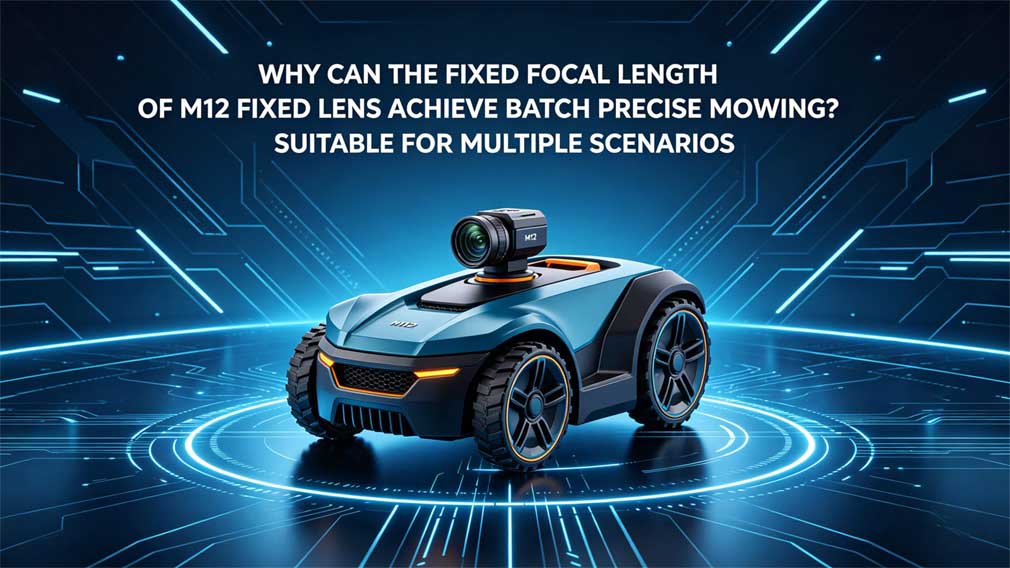
    As lawn mowing robots become an integral part of modern smart homes, the reliability of their vision systems is critical. A lawn mowing robot lens is not only about capturing a wide field of view—it must also withstand harsh outdoor conditions. From high summer temperatures to sudden rain showers, the performance of the lens directly determines how effectively the robot operates. 1.High-Temperature Resistance for Summer Use Lawn mowing robots often work under direct sunlight for hours. Ordinary lenses may suffer from performance degradation or image blur at elevated temperatures. A high-temperature resistant lens ensures stable image quality even in extreme heat, keeping navigation precise and uninterrupted. 2.Temperature Drift Control for Consistent Accuracy Outdoor environments are unpredictable, with temperatures rising and falling throughout the day. Without proper design, lenses can experience temperature drift, leading to focus shifts and reduced image clarity. Lenses engineered with low temperature drift technology maintain sharp and consistent vision, supporting accurate obstacle detection and efficient mowing. 3.Anti-Fog Coating for Clear Vision in All Weather Morning dew, humidity, or sudden changes in weather can easily cause fogging on lenses, blurring the camera’s vision. An anti-fog lens maintains a clear optical path in damp conditions, allowing the robot to continue operating reliably regardless of the season. 4.IP69 Waterproof Protection for Outdoor Reliability Rain or accidental water splashes are common in garden environments. A lens with IP69 waterproof rating offers the highest level of protection, preventing water intrusion even under high-pressure cleaning. This guarantees that the robot can function safely, rain or shine. 5.Smarter Lawn Care with Durable Vision A lawn mowing robot is only as smart as its vision. By using wide-angle, high-temperature resistant, anti-fog, and IP69 waterproof lenses, manufacturers can ensure their products perform with consistency, durability, and safety. These specialized lenses make the difference between a robot that merely works and one that works reliably in every season.
  • What Is the Best Thermal Camera Module?
    What Is the Best Thermal Camera Module? Sep 12, 2025
    Why Choosing the Right Module Matters From security surveillance to drone inspections and industrial thermography, the performance of a thermal camera module directly impacts the clarity and reliability of thermal imaging. But with so many options available, how do we define the “best” thermal camera module? The answer depends on several critical factors that determine image quality, integration, and long-term stability. 1. Resolution Defines Detail Resolution is one of the most important indicators of image clarity. A thermal camera module with higher resolution (such as 640×512) provides more detailed images, making it easier to identify small objects or subtle temperature differences. For applications like border security or UAV surveillance, resolution plays a key role in ensuring accurate monitoring. 2. Sensitivity (NETD) Enhances Image Quality Noise Equivalent Temperature Difference (NETD) measures how well a module detects small temperature variations. The lower the NETD, the clearer the image. A high-sensitivity infrared camera module can capture fine thermal contrasts even in low-visibility conditions, which is essential for industrial diagnostics and night-time operations. 3. Lens Options and Field of View A thermal imaging core module is only as effective as the lens paired with it. Wide-angle lenses provide broader coverage, making them ideal for surveillance, while telephoto lenses allow precise long-distance observation. Choosing the right field of view ensures that the thermal data matches the specific needs of the application. 4. Size, Weight, and Power Consumption The best thermal camera modules are not only powerful but also compact and energy-efficient. Drones, handheld devices, and embedded systems require lightweight designs with low power consumption, ensuring longer operation times and easier integration without sacrificing performance. 5. Durability and Reliability in Harsh Environments Thermal imaging is often used outdoors or in industrial environments where conditions are unpredictable. A reliable thermal camera module must withstand extreme temperatures, humidity, vibrations, and shocks. Long-term stability ensures consistent performance, whether mounted on a drone in flight or installed in fixed monitoring systems. 6. Application-Specific Optimization The “best” thermal module is not the same for every application. For example: Security and Surveillance → Wide field of view, high sensitivity for night vision. Drone Payloads → Lightweight, low power consumption, real-time video output. Industrial Inspection → High accuracy in temperature measurement, stable calibration. By aligning specifications with application requirements, users can determine which module is truly the best for their scenario. Defining “Best” by Purpose There is no universal answer to what the best thermal camera module is. Instead, the best choice depends on resolution, sensitivity, lens options, integration needs, and durability. Contact Wintop Optics to get modules with clear vision and reliable performance.
  • How to Make Dash Cam Footage Clearer?
    How to Make Dash Cam Footage Clearer? Sep 04, 2025
    In modern driving, a dash cam has become an essential safety companion. Whether it’s for handling traffic disputes or recording unexpected incidents, clear footage is critical. Yet many drivers are frustrated when reviewing their recordings—license plates appear blurry, details are hard to recognize, and nighttime scenes lack clarity. This raises the important question: how can dash cam footage be made clearer? Common Factors Affecting Dash Cam Footage Several factors influence the quality of dash cam recordings: Resolution – Higher resolution provides more detail. Lighting conditions – Low light, glare, or strong contrast can degrade clarity. Lens quality – Often overlooked, but arguably the most important factor. While many users focus on resolution or camera software, the truth is that the dash cam lens plays the most decisive role in achieving clear and reliable footage. Why the Lens Matters Most A dash cam can only perform as well as the lens it uses. Even with advanced sensors and processors, a poor lens will limit image quality. A high-quality automotive lens ensures: High light transmittance – Captures enough light for both daytime and nighttime driving. Low distortion – Maintains accurate, realistic images without bending straight lines. Wide aperture design – Enhances clarity in low-light or nighttime conditions. In other words, the lens is the “eye” of the dash cam. The sharper and more advanced the lens, the clearer and more reliable the footage will be. Choosing the Right Dash Cam Lens To achieve clear and consistent video quality, consider the following when selecting a dash cam lens: Lens material – Glass lenses are preferred over plastic for durability and resistance to heat. Field of View (FOV) – A wide angle lens captures more of the road, reducing blind spots, but should balance coverage with minimal distortion. Night vision performance – Lenses designed for low-light and infrared transmission greatly improve night vision footage. By paying attention to these factors, drivers can ensure their dash cam provides reliable evidence in any driving condition. Clarity Starts with the Lens Improving dash cam clarity is not just about resolution or software—it starts with the lens. From wide angle coverage and low distortion to night vision optimization, every aspect of the lens contributes to the quality of your recordings. A well-designed dash cam lens guarantees sharp, clear, and trustworthy footage, day or night. Choose Wintop Optics' dashcam footage to provide peace of mind and reliable evidence in the most important moments.
  • How to Choose the Best Lens for IP Camera Surveillance
    How to Choose the Best Lens for IP Camera Surveillance Aug 28, 2025
    Introduction: Why the Right Lens Matters When it comes to IP camera surveillance, many people focus on resolution or storage capacity, but the lens is the true factor that defines image quality. A high-quality surveillance lens ensures sharp details, accurate colors, and reliable performance in both daylight and low-light environments. Selecting the right lens type can significantly improve security efficiency and reduce blind spots. Fixed Lenses: Simple and Reliable A fixed lens offers a constant focal length and field of view. It is ideal for areas where the coverage angle does not need adjustment, such as entrances, corridors, or small rooms. These lenses are cost-effective and deliver consistent performance, making them one of the most popular options for IP camera surveillance systems. Varifocal Lenses: Flexible Field of View Unlike fixed lenses, a varifocal lens allows the user to manually adjust the focal length and angle of view. This makes it suitable for outdoor surveillance, parking lots, or any location where flexible coverage is needed. A high-quality varifocal surveillance lens reduces distortion while maintaining clear details, which is especially useful for facial recognition and license plate identification. Wide-Angle Lenses: Maximum Coverage For large spaces or open areas, a wide-angle IP camera lens provides maximum coverage with fewer cameras. These lenses minimize blind spots and are often used in retail stores, warehouses, or city surveillance. However, choosing a low-distortion wide-angle lens is essential to avoid image warping that could affect recognition accuracy. Low-Light and Night Vision Performance One of the key requirements of modern IP camera lenses is strong performance in low-light conditions. A lens with a larger aperture (lower F-number) allows more light to enter, improving visibility at night. Additionally, lenses designed for infrared night vision enable cameras to capture clear images even in complete darkness, making them essential for 24/7 surveillance applications. Choosing the Right Lens for Your Application The best surveillance lens depends on your specific project needs: Fixed lens for budget-friendly, stable coverage. Varifocal lens for flexibility in outdoor or complex environments. Wide-angle lens for large-area monitoring. Night vision lens for reliable 24-hour performance. By understanding these lens types, you can select the most suitable IP camera lens for your surveillance system. Conclusion: Clear Vision for Better Security The effectiveness of a surveillance camera is only as good as the lens it uses. Whether you are securing a home, business, or city infrastructure, the right IP camera lens ensures clarity, accuracy, and reliability. At Wintop Optics, we provide a wide range of surveillance lenses with options for fixed, varifocal, wide-angle, and night vision applications—helping you achieve better protection with professional optical solutions.  
  • How Drone Camera Lenses Capture Clear Images from the Sky
    How Drone Camera Lenses Capture Clear Images from the Sky Aug 21, 2025
    一、Introduction: The Eyes of a Drone In modern aerial photography and surveillance, the drone camera lens plays the same role as the human eye. While many people focus on the drone’s flight stability or battery life, the lens is the real key to capturing sharp, distortion-free, and high-contrast images from the sky. Choosing the right UAV lens directly determines image quality, performance in low light, and the ability to support advanced functions such as night vision and real-time monitoring. 二、Why Drone Camera Lenses Matter Unlike traditional cameras, aerial imaging faces unique challenges: vibrations during flight, changes in light conditions, and the need for wide-angle views without distortion. A professional drone lens must be: Lightweight and compact to minimize the impact on drone flight time. High-resolution to ensure every detail is captured from hundreds of meters above the ground. Low distortion to maintain accurate perspective, especially important for mapping and surveillance. 三、Key Features of Professional UAV Lenses Wide Field of View (FOV) – Helps drones cover more area in fewer passes. Low-Light and Night Vision Capability – Essential for night surveillance, search and rescue, and security monitoring. Durability – Lenses must withstand temperature changes, humidity, and even vibrations during long flights. Compatibility – Matching the lens with different image sensors (e.g., 1/2.8", 1/2.3") ensures optimal performance. By addressing these factors, a drone camera lens ensures stable and reliable imaging in various aerial scenarios. 四、Applications of Drone Camera Lenses Aerial Mapping & Surveying: High-resolution lenses deliver precise data for land planning and agriculture. Security & Surveillance: Wide-angle lenses provide a broader coverage for monitoring. Search & Rescue Operations: Night vision lenses enhance visibility in low-light or no-light conditions. Cinematic Aerial Photography: Lenses with low distortion and high contrast ensure stunning visual results. 五、Wintop Optics Drone Lens Solutions At Wintop Optics, we design and manufacture professional drone lenses tailored for aerial applications. Our product portfolio includes: Lightweight wide-angle UAV lenses for long endurance flights. Infrared and night vision lenses for enhanced low-light performance. Custom solutions for drone manufacturers who require unique specifications. With over 19 years of optical expertise, Wintop ensures every drone camera lens meets strict quality standards for clarity, stability, and durability. 六、Elevating Aerial Imaging The next time you see a drone capturing breathtaking landscapes or performing a rescue mission at night, remember that the lens is the hidden hero behind the scenes. Choosing the right UAV lens not only improves image quality but also expands the drone’s capabilities across industries. Explore our full range of drone and UAV lenses to find the right solution for your application.
  • How Do Night Vision Lenses Help Us See in the Dark?
    How Do Night Vision Lenses Help Us See in the Dark? Aug 05, 2025
    Seeing Beyond Darkness: Why Night Vision Matters In a world where surveillance, navigation, and observation increasingly extend into low-light or completely dark environments, the role of night vision lenses has never been more critical. Whether used in military-grade equipment, security cameras, or compact drones, these precision-engineered lenses allow us to capture and interpret what our eyes cannot see. But how exactly do night vision lenses work, and what makes a lens effective in darkness? The Science Behind Night Vision Lenses At the core, a night vision lens is designed to collect and amplify minimal available light — including near-infrared wavelengths — and direct it accurately onto the image sensor. Unlike conventional lenses, which primarily work within the visible spectrum, a high-quality infrared lens must maintain exceptional clarity while supporting extended wavelengths, typically ranging from 400nm to 1100nm. This makes the lens structure, coating, and filter design particularly important for performance in night vision applications. Wide Aperture: Letting the Light In One of the critical design aspects of a professional night vision lens is its aperture. A wide aperture, such as F/1.2, allows a greater amount of light to enter the lens, which is essential in environments where illumination is minimal. For example, a lens with a 30mm focal length and M12 mount, like the Wintop Optics' YT-4045-A6, balances long-range focus with compact structure, making it ideal for portable and embedded systems such as drone lenses and handheld night vision devices. Infrared Filters: Enhancing Image Accuracy In addition to the optical structure, the integration of IR filters significantly affects image clarity. A well-engineered night vision lens utilizes filters that selectively allow high transmittance at 850nm or 940nm, while suppressing unwanted wavelengths that might cause glare or distortion. This selective transmission is vital for ensuring sharp contrast in low-light imaging, which is why many low-light imaging lenses are optimized with multi-layer coatings and precise glass configurations. Low Distortion for High Precision Another challenge in night vision optics is controlling distortion. In professional-grade applications, lenses with low TV distortion (e.g., less than -0.24%) are crucial for accurate scene reproduction. This is particularly important in tactical or surveillance scenarios where edge-to-edge clarity can affect interpretation and decision-making. Pushing the Limits of Night Vision Technology As the demand for compact, high-performance optical solutions grows, night vision lens technology continues to evolve. From intelligent transportation systems to wildlife monitoring and beyond, these lenses empower users to operate efficiently in complete darkness. For researchers, engineers, and system integrators, selecting the right lens is not just about visibility — it’s about clarity, precision, and reliability when it matters most.  
  • What is the Working Distance for M12 Lenses?
    What is the Working Distance for M12 Lenses? Jul 11, 2025
    Understanding Working Distance in M12 Lenses When choosing an M12 lens for applications such as automotive cameras, security systems, or smart devices, working distance is a key parameter that directly affects image quality. Working distance refers to the physical space between the front surface of the lens and the object that appears in sharp focus. This distance is not fixed across all M12 lenses, as it depends on focal length, lens structure, and system requirements. Typical Working Distance Range for M12 Lenses Most M12 lenses are designed for compact imaging systems and have a relatively short working distance compared to larger-format lenses. For example, wide-angle M12 lenses with focal lengths like 2.8mm or 3.6mm typically have a working distance starting from just 10–30 cm, ideal for close-up monitoring. In contrast, telephoto M12 lenses with focal lengths of 8mm, 12mm, or 16mm are suited for observing subjects several meters away, providing a narrower field of view with extended working distances. Why Working Distance Matters for Procurement From a procurement standpoint, understanding the working distance of M12 lenses ensures compatibility with specific devices or projects. Purchasing a lens without confirming its working distance could lead to focus mismatch or mechanical integration issues. Procurement professionals should carefully check not only focal length and field of view but also related parameters like back focal length (BFL) and effective focal length (EFL), both of which relate closely to working distance and system design. Considerations for Optical Engineers For optical engineers, working distance affects both image sharpness and system calibration. In applications like ADAS (Advanced Driver Assistance Systems), smart home products, or industrial monitoring, precise control over working distance allows for accurate focusing and consistent optical performance. Engineers often select adjustable-focus M12 lenses to fine-tune the distance based on installation environments or object detection needs. Balancing Field of View and Working Distance There is always a trade-off between working distance and field of view when choosing an M12 lens. A shorter working distance usually means a wider viewing angle, while a longer working distance provides a narrower, more focused view. Understanding this balance is important both for product developers and end users, ensuring optimal imaging results. Tailored M12 Lens Solutions from Wintop Optics At Wintop Optics, we specialize in providing customized M12 lens solutions for various applications. Whether you require short or long working distances, our product range covers focal lengths from 1.0mm to 6.12mm, all with precise working distance specifications. Contact our team for expert guidance and find the right M12 lens for your project needs.
1 2 3 4 5 6 7 8

A total of 8 pages

Need Help? Chat with us

Leave a message
For any request of information or technical support, fill in the form. All fields marked with an asterisk* are required.
Submit

Home

Products

whatsApp

contact