Why Low Distortion Lenses Are Critical for Robotic Vision Systems
Apr 03, 2026
In robotic vision, accuracy is everything. Whether it’s a robotic arm performing pick-and-place tasks or a 3D inspection system measuring fine details, even small visual errors can lead to significant performance issues.
One of the most overlooked factors behind these errors is lens distortion. Choosing a low distortion lens for robotic vision systems can greatly improve measurement accuracy, object recognition, and overall system reliability.
This article explains why distortion matters, how it affects robotic performance, and how to select the right lens for your application.
What Is Lens Distortion in Machine Vision?
Lens distortion refers to the deviation of an image from its true geometric shape. Straight lines may appear curved, and objects may be slightly warped, especially toward the edges of the image.
In consumer photography, this may be acceptable. However, in machine vision lenses for robotics, distortion directly affects how accurately a system interprets real-world objects.
There are two common types:
Barrel distortion – images appear to bulge outward
Pincushion distortion – images appear to curve inward
Even small amounts of distortion can lead to measurable errors in robotic systems.
How Distortion Affects Robotic Vision Accuracy
1. Positioning Errors in Robotic Arms
In robotic arm vision systems, cameras guide the robot to locate and interact with objects. If distortion is present, the perceived position of objects can shift.
This may result in:
Misalignment during pick-and-place operations
Reduced precision in assembly processes
Increased calibration requirements
2. Measurement Inaccuracy in Inspection Systems
In quality inspection applications, dimensional accuracy is critical.
A low distortion lens for machine vision ensures that shapes and distances are represented correctly, reducing the risk of measurement errors or false rejections.
3. Depth Errors in Stereo Vision Systems
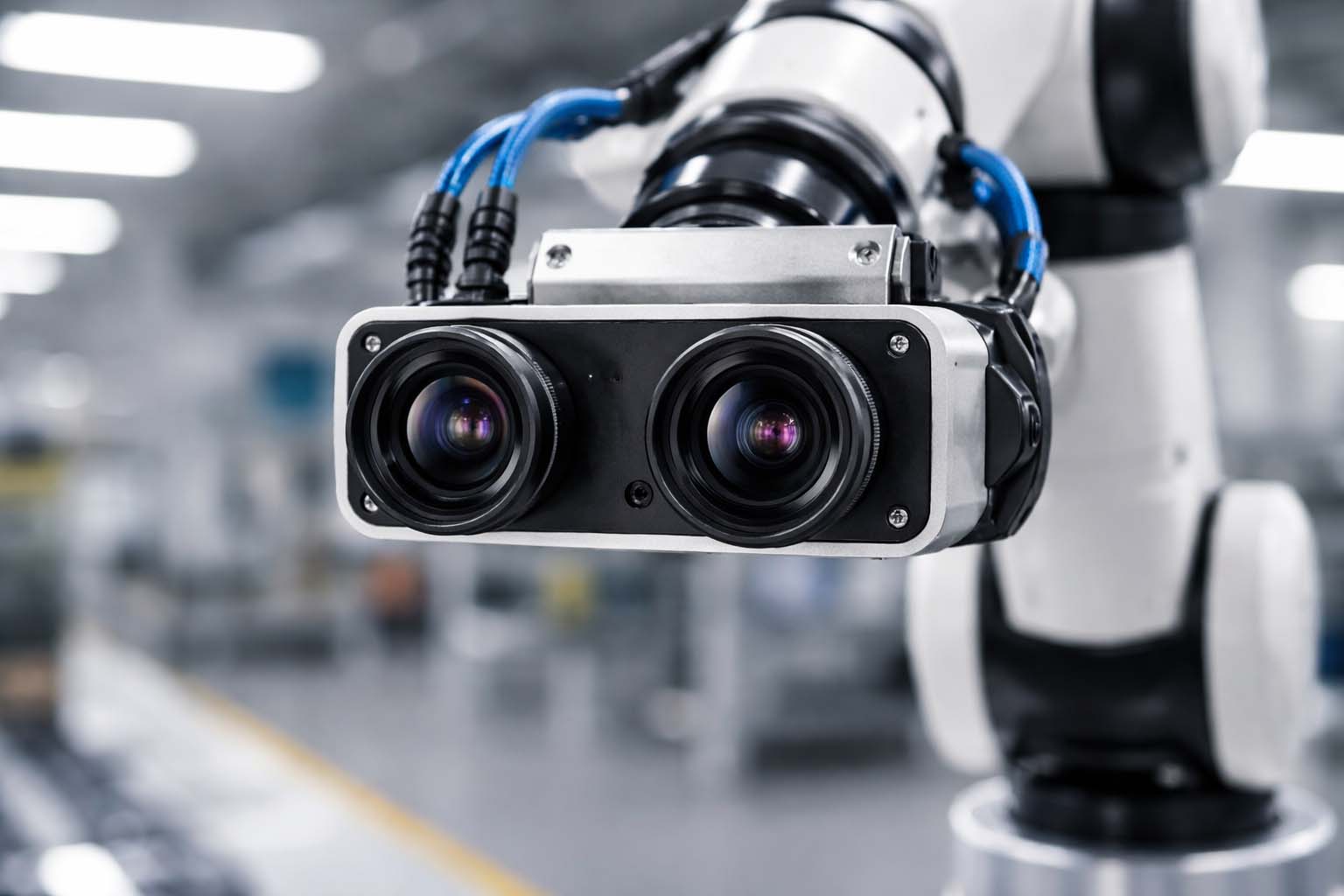
Distortion becomes even more critical in stereo vision lenses for robots.
Stereo systems rely on two synchronized images to calculate depth. If distortion is present, depth calculations may become inaccurate, leading to:
Reduced reliability in 3D perception
Errors in object distance estimation
Instability in robotic decision-making
Why Low Distortion Lenses Are Essential
Using a low distortion lens for robotic vision ensures that the captured image closely represents real-world geometry.
Key advantages include:
Improved positioning accuracy in robotic systems
More reliable measurement results
Enhanced depth perception in 3D vision applications
Reduced reliance on software correction
While software algorithms can compensate for distortion, they increase system complexity and may not fully restore geometric accuracy.
Key Features to Look for in a Low Distortion Robotic Vision Lens
When selecting a robotic vision lens, the following factors should be considered:
Controlled Distortion Level
Choose lenses with clearly specified distortion values, such as less than -18%. Lower distortion leads to more consistent and reliable imaging.
Field of View Balance
A wide angle lens for robotic vision can increase coverage, but excessive field of view may introduce more distortion. The goal is to balance visibility with accuracy.
Appropriate Focal Length
A focal length such as 3.05mm for robotic vision lenses provides a good balance between coverage and detail, especially in compact robotic systems.
Sensor Compatibility
A CRA-optimized lens for sensors helps ensure even light distribution and better image quality across the entire frame.
Compact and Standardized Design
A compact M12 lens for robotic cameras allows easier integration into robotic arms and embedded systems with limited space.
Industrial Durability
For harsh environments, industrial-grade optical lenses or IP69 rated camera lenses are recommended to ensure long-term stability and protection against dust and water.
Practical Impact on Robotic Systems
In real-world applications, switching to a low distortion lens for robotic arm vision systems can significantly improve:
Pick-and-place precision
Calibration stability
Edge detection and object recognition
For stereo vision systems, the improvement is even more pronounced, as accurate geometry is essential for depth calculation.
Final Thoughts
Lens distortion is not just a minor optical characteristic. It directly influences how robots perceive and interact with their environment.
By selecting the right low distortion lens for machine vision and robotics, engineers can improve accuracy, reduce system errors, and enhance overall performance.
As robotic systems continue to evolve toward higher precision and 3D perception, the importance of low distortion optics will only increase.
Contact Us
If you are developing a robotic vision system and need support in selecting the right lens, Wintop Optics can help.
We provide low distortion lenses, stereo vision lenses, and custom M12 lens solutions for robotic applications, tailored to your specific requirements.
Tel / WhatsApp: +86 15302689906Email: yorty@yuntal.com
Feel free to contact us to discuss your project and find the most suitable optical solution.




 Sign Up To Our Newsletters


 IPv6 network supported.