What Lens Is Best for Robotic Vision Systems?
Apr 03, 2026
Choosing the right lens for a robotic vision system isn’t just about getting a clear image—it directly impacts accuracy, depth perception, and system reliability. Whether you’re building a robotic arm for inspection, pick-and-place, or AI-driven automation, the lens plays a critical role in how well your system performs in real-world conditions.
In this guide, we’ll walk through how to choose the best lens for robotic vision systems, based on practical engineering needs rather than generic specs.
Why the Lens Matters More Than You Think
In many projects, teams focus heavily on sensors and algorithms, but overlook the lens. In reality, the lens defines:
How much of the scene your robot can “see”
How accurately it can measure distance and position
How well it performs under different lighting and environments
A poorly chosen lens can introduce distortion, reduce edge clarity, or limit field of view—leading to errors in detection and positioning.
Types of Lenses for Robotic Vision Systems
Different applications require different optical approaches. Some of the most common options include:
1. Standard Machine Vision Lenses
These are widely used for basic inspection and object detection. They work well when depth perception is not required.
2. Wide Angle Lenses for Robotic Vision
When your robot needs to monitor a larger area—such as conveyor belts or multi-object environments—a wide angle lens for robotic vision helps expand coverage without adding more cameras.
3. Stereo Vision Lenses for Robots
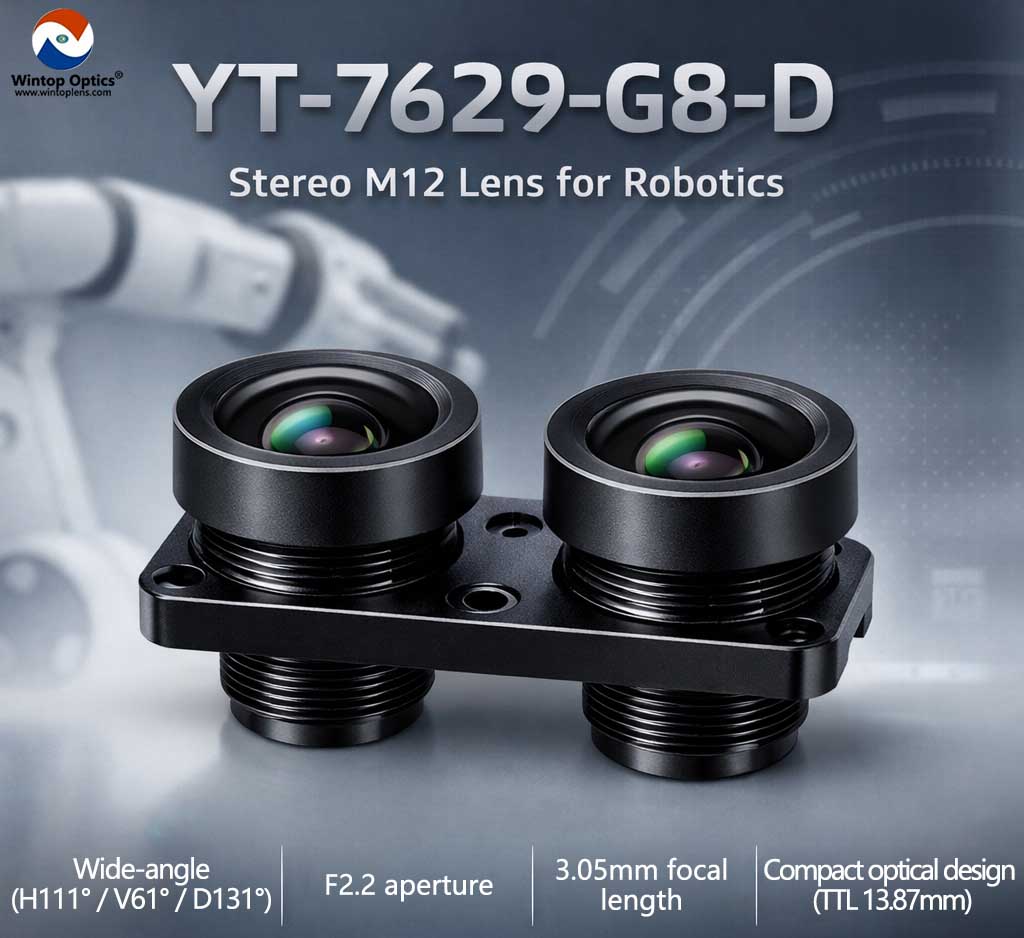
For applications requiring depth perception, such as robotic arms and 3D positioning, stereo vision lenses for robots are essential. They enable depth sensing by capturing two synchronized images, allowing the system to calculate distance accurately.
Key Factors When Choosing a Robotic Vision Lens
1. Focal Length and Field of View
The focal length determines how wide or narrow your view is.
Short focal lengths (e.g., 3.05mm focal length lens for robotics) provide a wider field of view
Wider views help reduce blind spots but may slightly reduce detail
For robotic arms, a balance is key: enough coverage to see the workspace, but with sufficient detail for precise positioning.
2. Distortion Control
Distortion is one of the most overlooked factors in robotic vision.
A low distortion lens for machine vision ensures that straight lines remain straight and measurements stay accurate. This is especially important in:
Object positioning
Dimensional inspection
3D reconstruction
Lenses with distortion below -18% are often preferred in wide-angle robotic systems to maintain geometric accuracy.
3. Aperture and Low-Light Performance
Lighting conditions in industrial environments can vary significantly.
A lens with an aperture like F2.2 offers a good balance between light intake and depth of field, making it suitable for both controlled and semi-variable lighting conditions.
4. Sensor Compatibility (CRA Matters)
Matching the lens to the sensor is critical.
A CRA-optimized lens for sensors ensures proper light distribution across the image, improving edge clarity and reducing vignetting. This becomes especially important when working with compact sensors like those used in embedded robotic systems.
5. Mechanical Design and Integration
In robotics, space is often limited.
A compact lens for robotic systems with a shorter total length (TTL) makes integration easier, especially in robotic arms or tight enclosures. Standard interfaces like M12 lenses for robotic cameras also simplify installation and replacement.
6. Environmental Durability
Not all lenses are built for industrial environments.
If your system operates in harsh conditions, choosing an IP69 rated camera lens can make a significant difference. These industrial-grade optical lenses are designed to withstand:
Dust and debris
High-pressure water exposure
Temperature fluctuations
This is especially important for applications like factory automation, food processing, or outdoor robotics.
Putting It All Together: What Should You Choose?
So, what lens is best for robotic vision systems?
The answer depends on your application—but in general, an ideal solution should offer:
Wide enough field of view for coverage
Low distortion for measurement accuracy
Compatibility with your sensor
Compact design for easy integration
Durability for your working environment
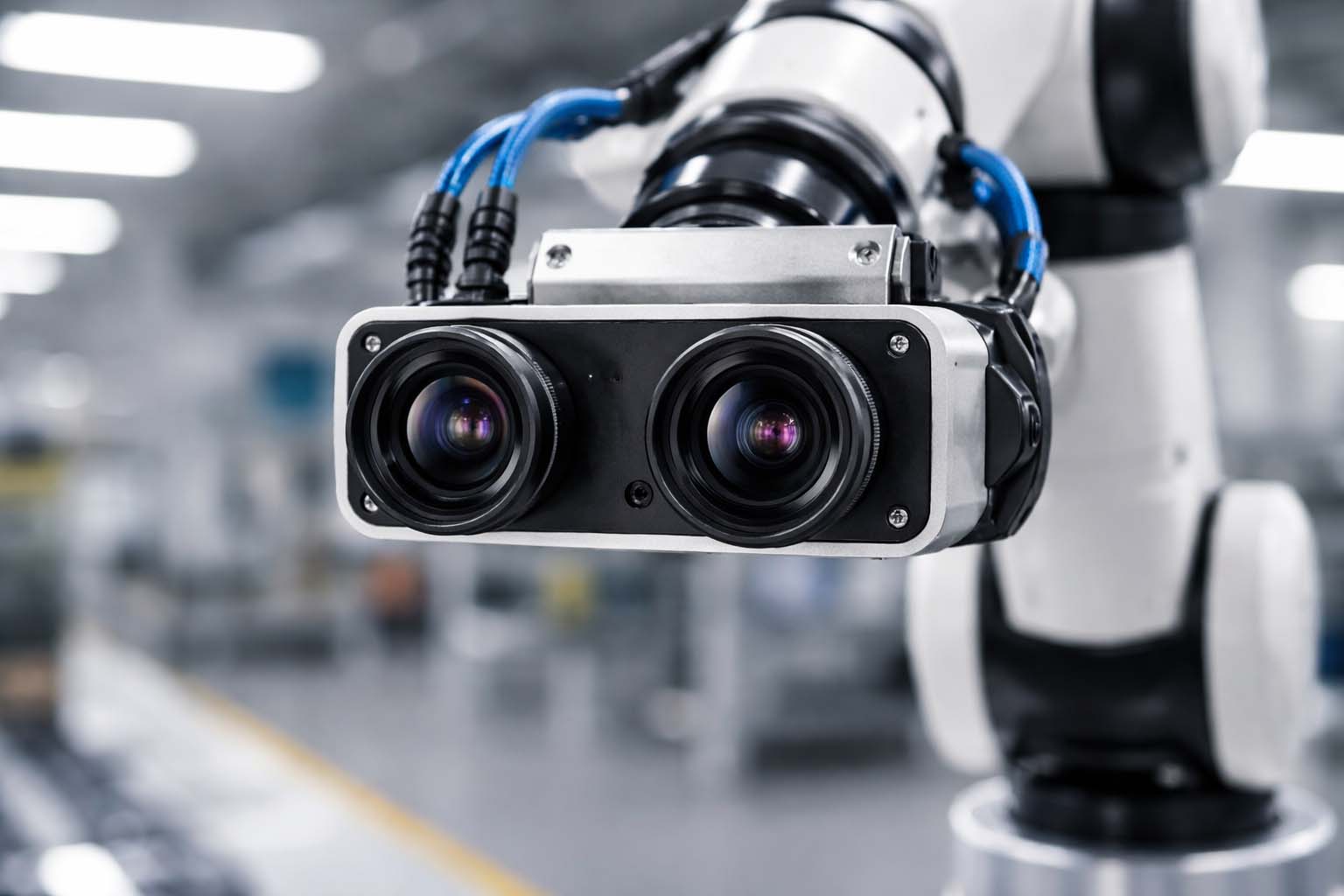
For example, in robotic arm vision systems that require depth perception, a stereo lens setup with low distortion, wide angle coverage, and industrial protection is often the most effective choice.
Final Thoughts
Selecting the right robotic vision lens isn’t about choosing the highest specs—it’s about choosing the right combination of optics, mechanics, and durability for your specific use case.
By understanding how factors like focal length, distortion, and environmental resistance affect performance, you can build a more reliable and accurate vision system from the ground up.
Let’s Talk About Your Project
If you’re working on a robotic vision system and need help selecting the right lens, we’re here to support you.
At Wintop Optics, we specialize in custom robotic vision lenses, stereo lens solutions, and M12 lens design for industrial applications—tailored to your exact requirements.
Tel / WhatsApp: +86 153 0268 9906Email: yorty@yuntal.com
Feel free to reach out—we’d be happy to help you find the right optical solution for your project.




 Sign Up To Our Newsletters


 IPv6 network supported.