What Are You Looking For?

Wintop Optics Launches YT-7018-E8-A 200° Fisheye Lens for Robotic Vision
Oct 27, 2026Reliable environmental perception is essential for autonomous mobile robots, industrial inspection systems, and intelligent service robots to navigate complex surroundings and perform tasks accurately. A well-designed robotic vision lens provides the visual input these systems need for obstacle detection, navigation, and automated operations.
The Wintop Optics YT-7018-E8-A is a 200° fisheye robot vision lens developed for applications requiring an ultra-wide field of view, a large aperture, and a compact optical design. With a 1.67mm effective focal length, F2.0 aperture, and IP69-rated protection, it offers an optical solution for robotic camera systems operating in demanding environments.
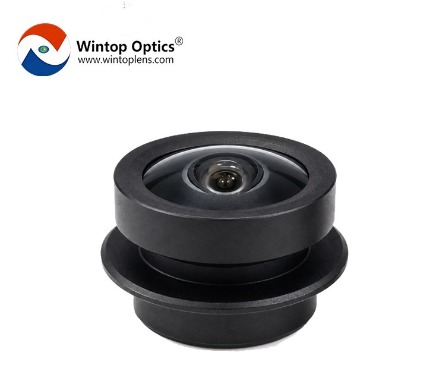
One of the key features of the YT-7018-E8-A is its 200° diagonal field of view. Its horizontal and vertical fields of view are 192° and 143°, respectively, enabling the lens to capture an exceptionally broad surrounding scene.
For mobile robots and autonomous platforms, a wide field of view can help reduce visual blind areas and provide more environmental information for navigation and obstacle detection. This is particularly useful when robots need to operate in complex indoor spaces, warehouses, production facilities, or other environments with nearby obstacles.
The fisheye optical design makes the YT-7018-E8-A suitable for robotic vision systems where broad scene coverage is a priority.
Lighting conditions can vary significantly across robotic applications. Robots may operate in dim warehouses, indoor corridors, industrial facilities, or areas with uneven illumination.
The YT-7018-E8-A features an F2.0 maximum aperture, allowing more light to reach the image sensor than a lens with a smaller aperture under comparable conditions. This supports image capture in low-light environments and provides a useful foundation for robotic perception systems.
Actual imaging performance also depends on sensor sensitivity, exposure settings, illumination, and image-processing capabilities.
Environmental protection is an important consideration when selecting a lens for industrial and mobile robotic systems.
The YT-7018-E8-A features IP69-rated protection, making it a potential choice for applications that require resistance to dust and demanding water-jet exposure under specified test conditions.
This feature is particularly relevant to cleaning robots, industrial inspection robots, and robotic equipment used in environments where exposure to dust, water, or frequent cleaning is a concern.
For practical implementation, engineers should verify the applicable IP69 test documentation and ensure that the complete camera assembly, including its housing, seals, and installation, achieves the required protection level.
Space is often limited in robotic camera systems. A lens must provide the required field of view while fitting within the mechanical constraints of the equipment.
With a 1.67mm effective focal length and a 13mm total track length (TTL), the YT-7018-E8-A supports integration into compact robotic imaging systems.
The lens is designed for use with the SC533HGS image sensor, which has a resolution of 2592 × 1944 pixels and a pixel size of 2.2μm. Its chief ray angle (CRA) is 18°, while its image height is 5.8mm.
These optical parameters provide useful reference points for engineers evaluating sensor compatibility and optical integration. Final compatibility should be confirmed against the sensor format, image circle, mechanical interface, and imaging requirements of the target system.
The YT-7018-E8-A is a fisheye robot vision lens with a 1.67mm effective focal length and an F2.0 maximum aperture. It provides a 200° diagonal field of view, with a horizontal field of view of 192° and a vertical field of view of 143°.
The lens has a total track length (TTL) of 13mm, a chief ray angle (CRA) of 18°, and an image height of 5.8mm. Its specified TV distortion is -43.7%, reflecting the characteristics of its ultra-wide fisheye optical design.
Designed for use with the SC533HGS image sensor, the lens supports a sensor resolution of 2592 × 1944 pixels and a pixel size of 2.2μm. It also features IP69-rated protection for applications requiring enhanced environmental resistance.
Because of its fisheye imaging characteristics, image calibration or distortion correction may be required depending on the robotic vision system and its image-processing algorithms.
With its ultra-wide field of view, F2.0 aperture, and IP69-rated protection, the YT-7018-E8-A can be considered for a variety of robotic imaging applications.
Autonomous Mobile Robots (AMRs): Capture surrounding visual information to support environmental perception and navigation.
Automated Guided Vehicles (AGVs): Provide wide-area imaging for robotic platforms operating in warehouses and industrial facilities.
Cleaning Robots: Support broad scene capture in applications where environmental exposure and cleaning requirements are important.
Industrial Inspection Robots: Provide ultra-wide visual coverage for inspection tasks in confined or demanding environments.
Service Robots: Support visual awareness in indoor service and autonomous operation scenarios.
The final application suitability depends on the robot's optical configuration, image-processing system, installation environment, and performance requirements.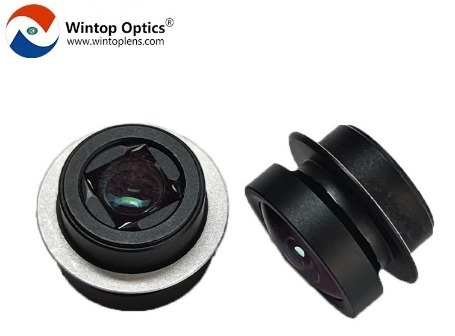
Choosing the right lens is essential for developing reliable robotic vision systems. The Wintop Optics YT-7018-E8-A combines a 200° diagonal field of view, F2.0 aperture, compact 13mm TTL, and IP69-rated protection in a fisheye optical design.
Its 1.67mm focal length and compatibility with the SC533HGS image sensor make it a potential solution for robotic camera manufacturers seeking ultra-wide environmental imaging in compact systems.
Wintop Optics provides optical lens solutions for robotics, industrial vision, automotive imaging, and other imaging applications. Contact our team to discuss the YT-7018-E8-A, confirm technical compatibility, and explore lens solutions for your robotic vision project.
 Sign Up To Our Newsletters
Tel : Overseas contact Lina : 86 153-0268-9906
Overseas emial : yorty@yuntal.com
WhatsApp : +86 153-0268-9906
E1108, Jinbolong Building, Longhua, Shenzhen,Guangdong, China


Friendly Links :
whatsappCopyright © 2026 WINTOP OPTICS. All Rights Reserved.粤ICP备2025439823号-1
 IPv6 network supported.