other
  • Driving Recorder Purchase Strategy: Choose the Perfect Driving Significant Other Tips
    Driving Recorder Purchase Strategy: Choose the Perfect Driving Significant Other Tips Oct 16, 2024
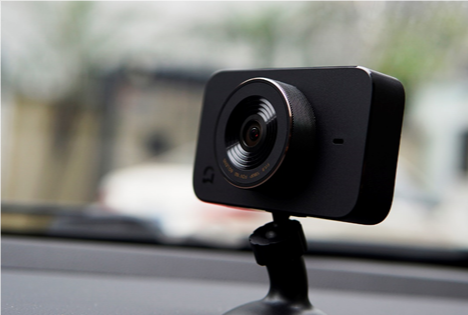
    A cost-effective tachograph is essential for providing evidence of vehicle safety and insurance claims. Here are some ways to purchase a tachograph: Good video recording: Choose a dashcam with high resolution, at least 1080p full high definition resolution or better. High resolution dashcams can capture a lot of details, such as traffic signs, traffic lights, pedestrians, license plate numbers, etc. In the event of an accident or dispute, these records can be used as evidence to prove innocence and to support insurance claims. Wide viewing angle: The basic shooting angles are: 90 degrees, 100 degrees, 120 degrees, 140 degrees, 150 degrees, 170 degrees, etc. The more popular single-lens driving recorders are equipped with wide-angle lenses of 120 degrees or 140 degrees. When a single lens is 170 degrees, the picture will be seriously deformed, affecting the clarity of the picture. If you choose a driving recorder with a wide-angle lens, it is recommended that buyers use a viewing angle of at least 130 degrees to ensure a wider field of view is recorded. Night use: It is necessary to pay attention to the performance of the driving recorder at night or in low-light conditions. The driving recorder has a night vision lens that can capture the faint light that the human eye cannot detect and magnify it, allowing you to see objects and scenes in extremely dark environments. Storage capacity and loop recording: Driving recorders typically use a memory card to save recordings. Choose to have enough storage capacity to record as long as you need, while supporting loop recording to automatically overwrite old recordings when the memory card is full. G-sensor: The G-sensor can sense the force of a collision or sudden change, saving the relevant video footage as an emergency to prevent it from being overwritten by loops. Vehicle power and parking monitoring: Some tachographs have the ability to connect to the vehicle's power supply, which can automatically start recording in the event of an incident. In addition, some tachographs also have parking monitoring capabilities, which can record while the vehicle is parked. Car rearview lens can help car owners achieve the desired parking effect Convenience and versatility: Consider choosing a dashcam that is easy to use and set up. Other features include GPS recording, Wi-Fi connectivity, mobile app control, and more. Brand and user reviews: Select well-known brands and review the reviews and opinions of other users to understand the reliability, after-sales services and performance of the dashcam. Legal requirements: Understand the legal requirements and regulations in your area and ensure that the selected driving recorder complies with local regulations. 3C certification: At present, buses, buses and school buses need to install tachographs, logistics and transportation companies have also begun to install tachographs, and require products to be 3C certified. According to the tachographs regulations of the National Compulsory Certification Quality Center, tachographs and car black boxes must be 3C certified before they can be sold. Therefore, buyers should choose carefully when choosing products and buy products produced by regular manufacturers with 3C certification. Budget: Determine the scope of purchasing a tachograph according to your own budget, and make a trade-off between quality and functionality. Try to choose a well-concealed one to reduce the risk of window smashing and theft. Please note that these guidelines are for reference only, and buyers need to adjust them according to their individual needs and priorities, and carefully compare different brands and models of dashcams before purchasing.  
  • High-Definition Automotive Backup Camera Lenses: Precision for Safer Reversing
    High-Definition Automotive Backup Camera Lenses: Precision for Safer Reversing Mar 06, 2025
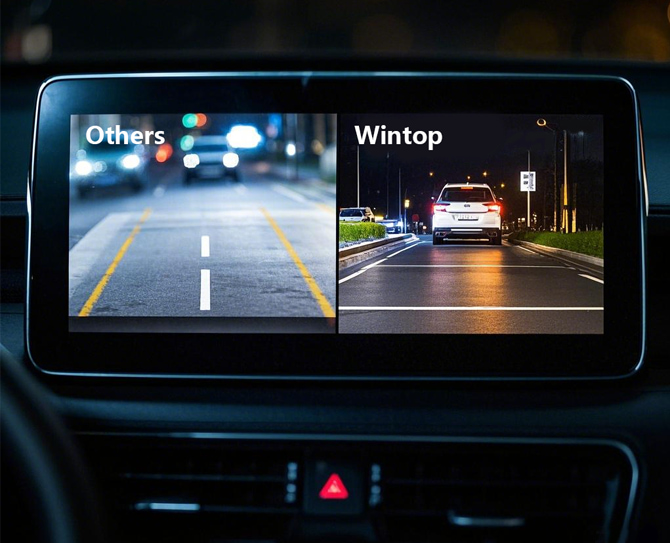
    In today’s automotive landscape, safety is no longer a luxury—it’s a necessity. As vehicles become smarter and drivers demand greater visibility, the role of high-definition automotive backup camera lenses has evolved from a convenience feature to a critical safety component. Whether navigating crowded parking lots, towing trailers, or reversing in low-light conditions, drivers rely on crisp, distortion-free imaging to avoid accidents. At the heart of these systems lies advanced optical technology, including M12 mount lenses, night vision lenses, and precision-engineered automotive lenses designed to perform under pressure. The Rise of Backup Cameras: Why Optics Matter Since their mandated inclusion in all new U.S. vehicles in 2018, backup cameras have prevented an estimated 17,000+ accidents annually (NHTSA). However, not all cameras are created equal. A system’s effectiveness hinges on one often-overlooked component: the automotive lens. Key Challenges in Reversing Safety: 1.Blind Spots: Traditional rearview mirrors leave 30-50% of critical areas unseen. 2.Low-Light Conditions: 48% of parking accidents occur at night (IIHS). 3.Environmental Stress: Lenses must withstand temperature extremes, vibration, and moisture. This is where specialized automotive backup camera lenses bridge the gap.   M12 Mount Lenses: The Compact Powerhouse The M12 mount lens (also known as an S-mount lens) has emerged as the gold standard for automotive imaging systems. With a 12mm diameter thread, these lenses balance miniaturization with optical performance—a perfect fit for sleek, modern vehicle designs. Why M12 Lenses Dominate Automotive Applications: 1.Space Efficiency: Their compact size integrates seamlessly into tight spaces like license plate housings or rearview mirrors. 2.Modular Compatibility: M12’s standardized threading allows quick swaps and upgrades. 3.Cost-Effective Scalability: Ideal for mass production without sacrificing quality. For backup cameras, M12 lenses often pair with high-resolution sensors (2MP-8MP) to deliver 1920x1080p to 4K imaging. Combined with wide-angle designs (120°-170°), they eliminate blind spots while maintaining edge-to-edge sharpness. Case Study: M12 Lens in Action A leading European automaker reduced parking-related warranty claims by 22% after upgrading to M12-based systems with: 6G optical glass for scratch resistance IR-cut filters to minimize color distortion Aspherical surfaces correcting spherical aberrations   Night Vision Lenses: Seeing Beyond the Headlights While daytime clarity is essential, night vision lens technology is where safety systems prove their worth. Over 75% of drivers report reduced confidence when reversing in darkness—a gap addressed by advanced low-light optics. How Night Vision Lenses Work: 1.Wide Aperture (F1.4-F2.0): Maximizes light intake for brighter images. 2.Near-Infrared (NIR) Compatibility: Enhances visibility up to 30 meters in 0 lux conditions. 3.Anti-Glare Coatings: Reduces halos from streetlights or opposing headlights. Recent innovations like starlight sensor technology push boundaries further, enabling color imaging in moonlight (0.001 lux).   Technical Breakdown: Night Vision vs. Standard Lenses Feature Standard Lens Night Vision Lens Aperture F2.4 F1.6 Lux Range 1 lux+ 0.001 lux Coating Single-layer AR Multi-layer IR+AR MTF @ 100 lp/mm 45% 65% Engineering Reliability into Automotive Lenses Automotive environments are unforgiving. From -40°C winters to 85°C engine heat, automotive lenses must perform flawlessly for decades. Durability Benchmarks: IP69K Rating: Resists high-pressure water jets and dust ingress. 20G Vibration Resistance: Survives potholes and off-road abuse. UV-Stabilized Housing: Prevents yellowing from sun exposure. Manufacturers like Wintop Optics achieve this through: Automated Centering: Sub-3μm alignment precision for consistent focus. Nano-Coating Technology: Water-repellent surfaces prevent fogging.   The Future of Reversing Safety: AI and Beyond As vehicles transition toward autonomy, backup cameras are evolving into 360° surveillance systems. Emerging trends include: 1. AI-Powered Object Detection: Lenses feed data to machine learning algorithms that identify pedestrians, cyclists, and obstacles in real time. 2. LiDAR Integration: Hybrid systems combining M12 lenses with LiDAR enhance depth perception in fog or rain. 3. Cybersecurity: Encrypted lens modules prevent hacking of video feeds—a growing concern for connected cars. Choosing the Right Lens: A Buyer’s Checklist Whether you’re an OEM engineer or an aftermarket installer, prioritize these features: 1.Resolution: Match lens MP to sensor capabilities (e.g., 8MP lens for 4K cameras). 2.Field of View (FoV): 150°+ for trucks/RVs, 120° for compact cars. 3.Iris Control: Auto-iris lenses adapt to sudden light changes (e.g., tunnel exits). 4.Certifications: ISO/TS 16949 compliance ensures automotive-grade reliability. Wintop Optics: Your Partner in Optical Safety With 15+ years of expertise, Wintop Optics delivers mission-critical automotive lenses trusted by global brands. Our solutions include: M12 Mount Lenses: From 1.8mm fisheye to 12mm telephoto configurations. Night Vision-Ready Optics: NIR coatings optimized for 850nm/940nm wavelengths. Custom Engineering: Modify FoV, flange distance, or coatings for your platform.  

Need Help? Chat with us

Leave a message
For any request of information or technical support, fill in the form. All fields marked with an asterisk* are required.
Submit

Home

Products

whatsApp

contact