What Are You Looking For?

How to Test Camera Lens Quality? A Practical Guide for Industrial and M12 Lenses
Mar 14, 2026In modern imaging systems, the quality of the camera lens directly affects image clarity, accuracy, and system performance. Whether the lens is used in robotics, smart security cameras, drones, or industrial vision systems, reliable optical performance is essential.
When sourcing lenses from a professional camera lens manufacturer or an experienced M12 lens supplier, understanding how lens quality is tested can help you choose the right optical solution for your project.
This article introduces the most important methods used by professional M12 lens factories to test and evaluate camera lens quality.
Resolution testing determines how clearly a lens can reproduce fine details. It is one of the most important indicators of lens performance, especially for applications such as machine vision and AI cameras.
Manufacturers usually perform MTF (Modulation Transfer Function) testing to measure image contrast at different spatial frequencies.
For example, a high resolution M12 board lens designed for industrial inspection should maintain strong image sharpness not only in the center but also toward the edges of the frame.
If the lens is designed for a 1/3 sensor M12 large aperture lens, resolution testing ensures the lens can fully utilize the sensor's pixel capability without image degradation.
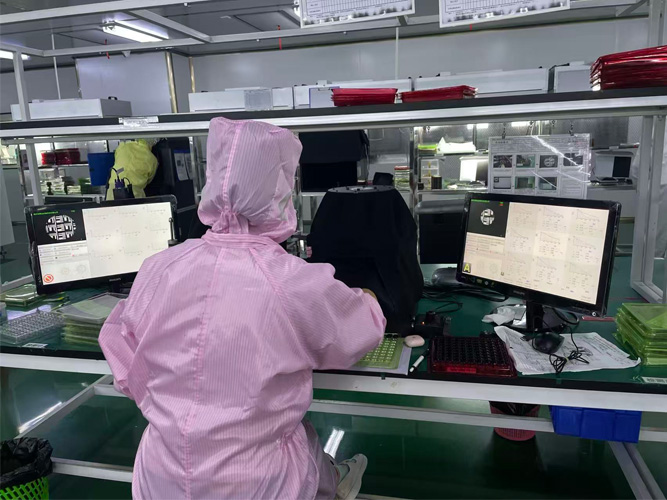
The field of view (FOV) determines how much of the scene a camera can capture. Accurate FOV measurement is particularly important for wide-angle lenses used in robotics and surveillance systems.
A robot vision wide-angle M12 lens may offer extremely large viewing angles to help autonomous systems perceive their surroundings.
During testing, optical measurement equipment checks whether the actual FOV matches the design specification. Even small deviations can affect positioning accuracy in robotics or automated inspection systems.
Reliable industrial M12 camera lens manufacturers conduct strict FOV verification during both development and production stages.
Wide-angle lenses naturally introduce some distortion, especially barrel distortion. However, excessive distortion can negatively affect image interpretation and measurement accuracy.
Engineers usually evaluate distortion by photographing grid charts or calibration patterns. Specialized optical software then analyzes how much the lines deviate from their expected positions.
A well-designed wide-angle M12 lens for robot vision balances large viewing angles with controlled distortion, ensuring usable images for AI algorithms and visual navigation.
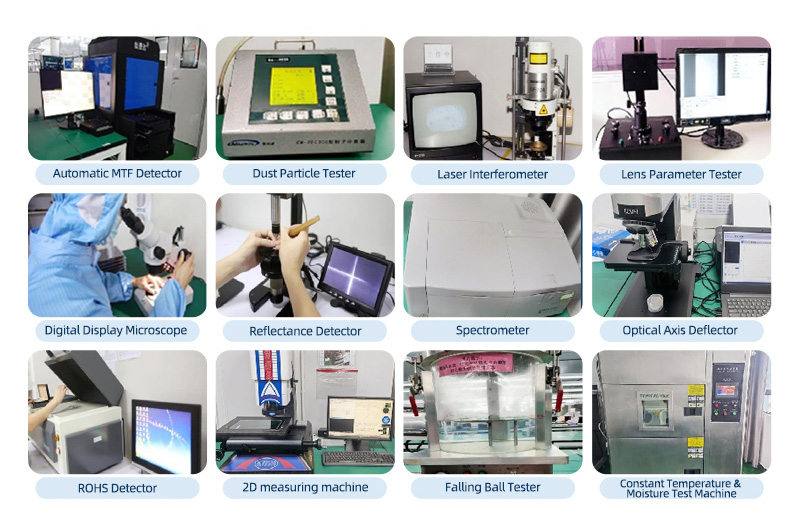
Aperture size determines how much light a lens can collect. Larger apertures allow the camera to capture brighter images in low-light environments.
For example, a 1/3 sensor M12 large aperture lens is often used in security cameras, night monitoring devices, and intelligent traffic systems.
Testing usually includes evaluating image brightness, noise level, and clarity under low illumination conditions.
A well-designed low light M12 lens for security camera systems should maintain clear imaging while minimizing noise and motion blur.
Modern CMOS sensors require careful lens matching to achieve optimal performance. One important parameter is the Chief Ray Angle (CRA).
If the CRA is too large, light may reach the sensor at an improper angle, causing shading or image quality loss.
When designing lenses for sensors such as 1/3-inch imaging sensors, engineers optimize the optical path to ensure compatibility.
This is especially important when developing a 1/3 sensor M12 camera lens for machine vision cameras or compact AI imaging devices.
Camera lenses must also withstand real-world environments. This is particularly important for lenses used in vehicles, drones, and industrial equipment.
Professional manufacturers perform reliability testing including:
vibration testing
temperature cycling
humidity exposure
mechanical shock testing
An industrial M12 camera lens designed for robotics or automotive systems often features durable metal housing and precise assembly to ensure long-term stability.
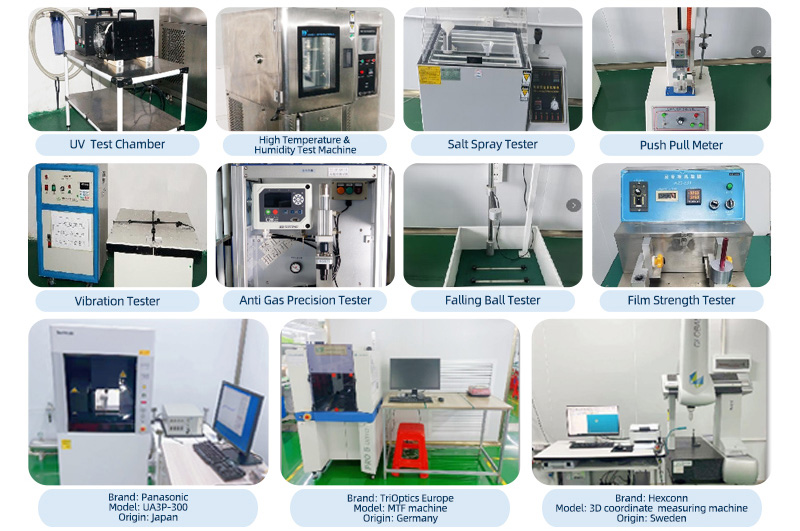
Optical coatings significantly affect image quality. Multi-layer anti-reflection coatings improve light transmission and reduce unwanted reflections.
Testing equipment measures how efficiently light passes through the lens elements and verifies coating consistency.
High-quality coatings help reduce flare, improve contrast, and ensure stable imaging performance for applications such as AI cameras, industrial inspection systems, and smart surveillance devices.
Beyond testing methods, selecting a reliable manufacturing partner is critical for consistent lens quality.
A professional optical supplier should provide:
advanced optical design capabilities
precision manufacturing processes
strict quality inspection standards
customized lens solutions for specific sensors and applications
Whether you need a robot vision wide-angle M12 lens, a 1/3 sensor M12 large aperture lens, or a low light M12 lens for security cameras, working with an experienced optical manufacturer ensures stable performance and long-term supply.
Testing camera lens quality involves a combination of optical measurement, sensor compatibility verification, mechanical reliability testing, and coating inspection.
These evaluation methods help ensure that modern M12 camera lenses meet the demanding requirements of robotics, AI vision, industrial inspection, and surveillance systems.
By understanding how lenses are tested, engineers and buyers can confidently choose high-performance optical components that deliver reliable imaging results in real-world applications.
For expert advice and reliable optical lens solutions, please contact our professional team:
Tel / WhatsApp / WeChat: +86 153 0268 9906 / +86 153 0268 9906
Email: yorty@yuntal.com
 Sign Up To Our Newsletters
Tel : Overseas contact Lina : 86 153-0268-9906
Overseas emial : yorty@yuntal.com
WhatsApp : +86 153-0268-9906
E1108, Jinbolong Building, Longhua, Shenzhen,Guangdong, China


Friendly Links :
whatsappCopyright © 2026 WINTOP OPTICS. All Rights Reserved.粤ICP备2025439823号-1
 IPv6 network supported.