What Is the Difference Between an Optical Lens and an Electron Lens?
Mar 31, 2025
Have you ever wondered how your smartphone captures vivid sunset hues, while an electron microscope reveals the atomic structure of a butterfly’s wing? At the heart of this technological duality lie two unsung heroes: optical lenses and electron lenses. While both manipulate waves to shape our understanding of the world, their principles and applications diverge dramatically. As a trusted supplier of high-performance optical lenses for smart homes, automotive systems, and industrial imaging, we’re breaking down these differences to help engineers and innovators choose the right tool for their vision-driven projects. Let’s explore how light and electrons redefine clarity—and why your next breakthrough might depend on mastering both.
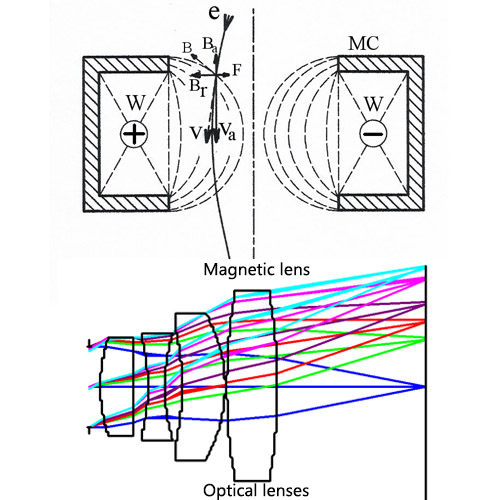
1.Fundamental PrinciplesOptical lenses rely on the refraction of visible light through materials like glass or polymer to focus or diverge light beams. These lenses are designed using precise curvature calculations to achieve desired focal lengths. In contrast, electron lenses utilize electromagnetic fields to manipulate electron beams in vacuum environments. While high-quality glass lenses dominate photography, microscopy, and eyewear, electron lenses are essential in electron microscopes and semiconductor fabrication, where sub-nanometer resolution is required.
2. Material and Design RequirementsOptical lenses prioritize transparency, durability, and anti-reflective properties. Advanced optical coatings, such as anti-glare or UV-protective layers, enhance their performance. Electron lenses, however, demand ultra-high vacuum compatibility and electromagnetic precision. For industries needing custom optical lenses, material selection—like fused silica for extreme environments—ensures longevity and accuracy.
3. Application-Specific PerformanceOptical lenses are engineered to deliver exceptional performance across diverse industries. In smart home devices, high-precision optical lenses enable sharp imaging for security cameras and facial recognition systems, ensuring reliable monitoring in low-light conditions. Automotive applications rely on durable, anti-glare lenses for advanced driver-assistance systems (ADAS), enhancing safety through real-time object detection. For surveillance camera lenses, our custom optical components provide wide-angle views and distortion-free clarity, critical for 24/7 public safety operations. Meanwhile, Aerial sports camera lens demand compact, shock-resistant designs to capture high-speed activities without compromising image stability. Whether it’s optimizing light transmission for smart sensors or minimizing chromatic aberration in rugged environments. Electron lenses are irreplaceable in scientific research and nanotechnology.
4. Environmental and Operational FactorsOptical lenses operate under standard atmospheric conditions, making them ideal for consumer electronics and automotive sensors. Electron lenses, however, require controlled vacuums to prevent electron scattering. This distinction highlights why industries like aerospace or semiconductor manufacturing often invest in both technologies—opting for durable optical components for external sensors and electron lenses for internal nanoscale analysis.
5. Choosing the Right SolutionSelecting between optical and electron lenses depends on your project’s wavelength, resolution, and environmental needs. At Wintop Optics, we provide tailored optical solutions, from aspheric lenses for reduced spherical aberration to multi-layer coated lenses for enhanced light transmission. Our expertise ensures compatibility with your technical specifications, whether for industrial automation, medical imaging, or R&D.
Final ThoughtsWhile optical and electron lenses serve distinct purposes, both are vital to advancing imaging technology. By partnering with a trusted optical lens manufacturer, you gain access to cutting-edge designs and reliable performance. Ready to optimize your system? Contact us today to discuss your requirements—we’re here to engineer clarity into every application.




 Sign Up To Our Newsletters


 IPv6 network supported.