Are Glass Lenses Better Than Plastic for Dash Cams?
Jan 23, 2026
When choosing a dash cam, most users focus on resolution, night vision, or recording angle. However, one critical component is often overlooked—the lens. Specifically, whether the dash cam uses a glass lens or a plastic lens can make a significant difference in image quality, durability, and long-term performance. So, are glass lenses really better than plastic ones for dash cams? Let’s break it down.
1. Optical Clarity: Why Material Matters
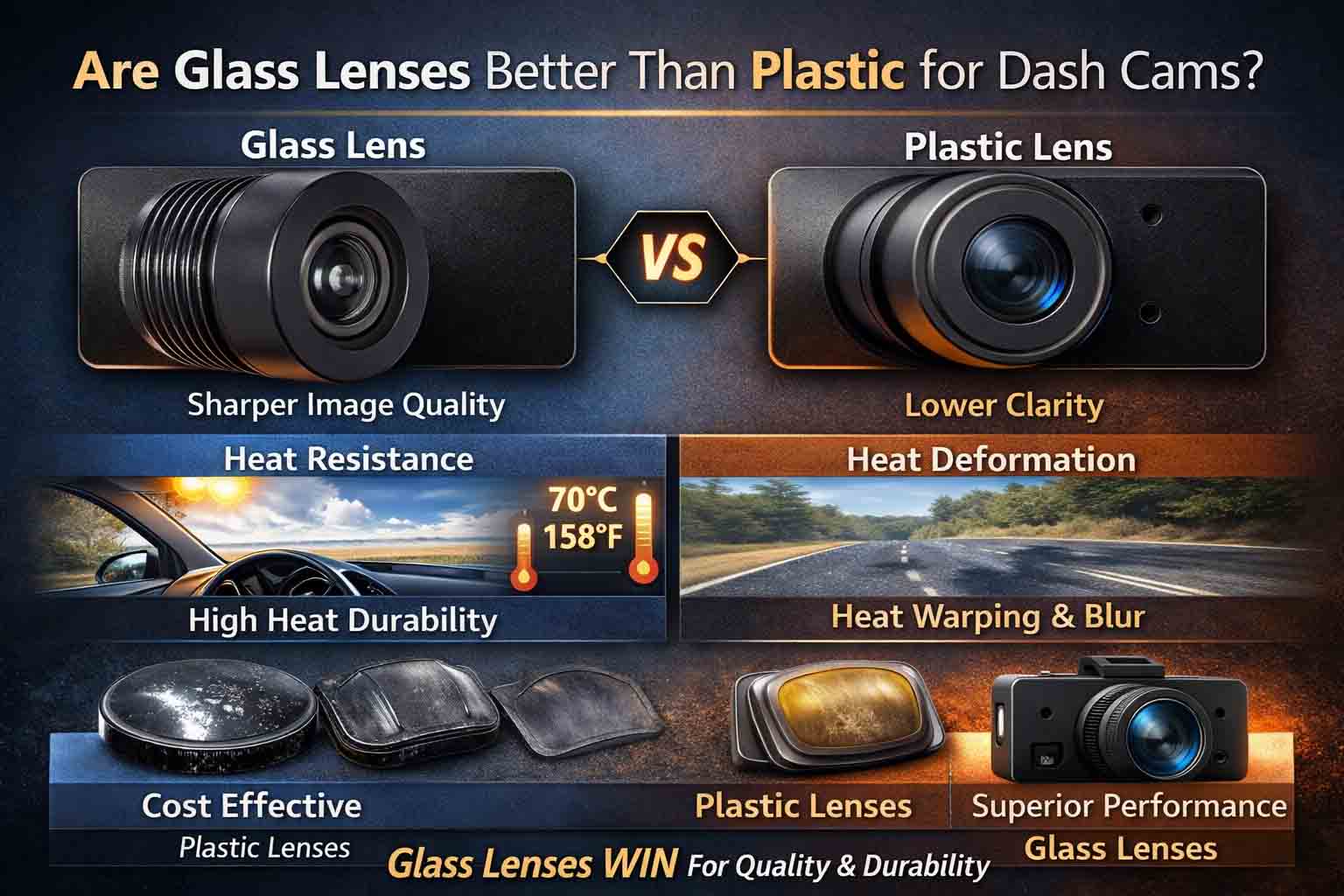
The primary function of a dash cam lens is to accurately transmit light to the image sensor. Glass lenses generally provide superior optical clarity compared to plastic lenses. Glass has a more stable refractive index, which helps reduce distortion, chromatic aberration, and edge blurring.
In real driving scenarios—such as capturing license plates or road signs—this clarity can be the difference between usable and unusable footage. High-quality dash cam lenses made from optical glass tend to maintain sharpness across the entire field of view.
2. Heat Resistance in Real Driving Conditions
Dash cams operate in challenging environments. Inside a parked car, temperatures can easily exceed 70°C (158°F). Plastic lenses are more susceptible to deformation under high heat, which can cause image softening or focus drift over time.
Glass lenses, on the other hand, are far more heat-resistant. This makes them especially suitable for dash cams that are expected to run continuously in hot climates. For long-term reliability, glass lenses offer a clear advantage.
3. Durability and Aging Performance
Over time, plastic lenses may yellow, scratch, or degrade due to UV exposure. This aging process gradually reduces image quality, even if the sensor itself remains unchanged.
Glass lenses are more resistant to:
UV radiation
Surface wear
Chemical corrosion
As a result, dash cams equipped with glass lenses tend to maintain consistent performance over years of use, making them a better choice for drivers who value long-term stability.
4. Cost Considerations: Is Glass Always Worth It?
It’s true that plastic lenses are cheaper to manufacture, which is why they are often found in entry-level dash cams. For basic recording needs, they can still be functional.
However, for mid-range to high-end dash cams—especially those with high-resolution sensors—glass lenses better match the sensor’s capabilities. Investing in a dash cam with a high-quality glass lens often results in better overall value when considering lifespan and image consistency.
5. Hybrid Lens Designs: A Balanced Solution
Some manufacturers use hybrid lenses, combining multiple glass elements with plastic components. This approach balances cost and performance while still delivering improved optical quality compared to all-plastic designs.
That said, dash cams with multi-element all-glass lenses are typically preferred for professional, fleet, or safety-critical applications.
Final Verdict: Glass vs. Plastic Lenses for Dash Cams
So, are glass lenses better than plastic for dash cams? In most cases, yes.
Glass lenses offer:
Better image clarity
Higher heat resistance
Longer service life
More stable optical performance
If image quality, durability, and reliability matter to you, choosing a dash cam with high-quality glass lenses is a smart decision—especially for demanding driving environments.




 Sign Up To Our Newsletters


 IPv6 network supported.